
Counting seems like something anyone can do without help. So why do coaches, ushers, researchers, and people at prayer reach for a tally counter instead of just keeping the number in their head or making marks on paper?
The short answer: both of those methods break down in exactly the situations where an accurate count matters most. This article looks at what goes wrong with each one, and what a tally counter does differently.
The Short Answer
People use tally counters because a counter holds the number for them. That frees their attention for the thing they’re actually doing — watching a door, keeping good form, concentrating on a prayer, or handling stock — and it means a distraction doesn’t wipe out the count.
What Goes Wrong When You Count in Your Head
One interruption can erase the number
A mental count only exists while you’re holding it. If someone asks you a question at count 47, it’s easy to come back unsure whether you were at 47 or 74 — and there’s no way to check.
Your attention is split
Repeating a number to yourself uses the same mental space you need for watching, listening, or thinking. The more you focus on the task, the more likely the count slips — and the more you focus on the count, the worse you do the task.
It gets harder as numbers grow
Keeping track of 8 is easy. Keeping track of 386 over twenty minutes is not. Long counts are where small slips add up.
Nobody else can check it
A number in your head can’t be handed to a colleague halfway through a shift or double-checked at the end.
What Goes Wrong With Tally Marks on Paper
Paper tallies solve the memory problem, which is why they’ve been used for centuries. But they bring their own issues:
- You need both hands and a surface. That’s awkward when you’re standing at a door, walking a field, or holding equipment.
- You have to look down. Every mark takes your eyes off what you’re counting, so fast events get missed.
- The total isn’t visible. You have to stop and add up the groups of five to know where you are.
- Marks can be miscounted later. A smudged line or an uneven group throws off the final tally.
Tally marks are still great for quick counts and for teaching. Learn how they work in What Do 5 Tally Marks Mean?
What a Tally Counter Does Differently
- One action per item. Press once, count once — no thinking about the number.
- The total is always visible. Glance down any time and you know exactly where you are.
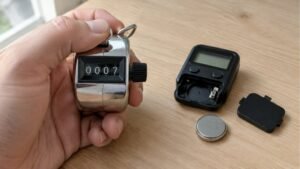
- Your eyes stay on the task. A mechanical counter’s click can be felt, so you can count without looking.
- Interruptions don’t reset you. Answer a question, then carry on from the number on the display.
- The count can be shared. Hand the counter to someone else, or read the number out at the end of a shift.
Head vs Paper vs Tally Counter at a Glance
- Counting in your head: nothing to carry, but easily lost to interruptions and hard to keep up for long counts.
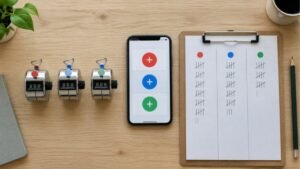
- Tally marks on paper: leaves a record, but needs both hands, a surface, and adding up at the end.
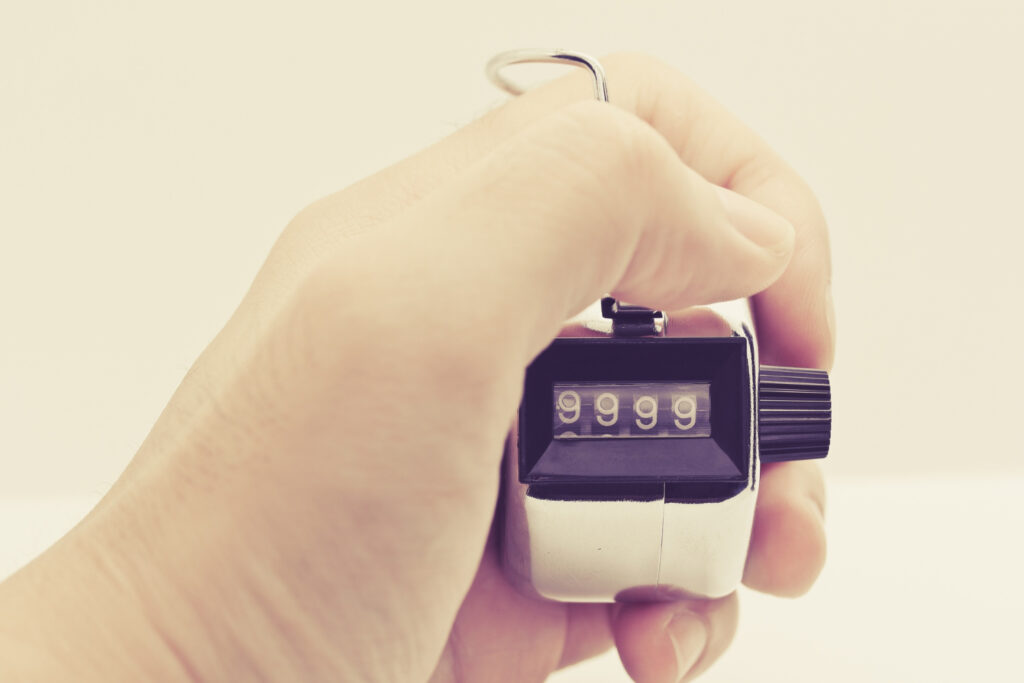
- Tally counter: one hand, total always visible, survives interruptions — but it’s one more thing to carry (or a phone screen to watch, for an online counter).
When Counting in Your Head Is Fine
You don’t need a counter for everything. Mental counting works well when the number is small, the count is short, nothing will interrupt you, and a mistake wouldn’t matter much — like counting ten push-ups at home. A counter earns its place when the count is long, the setting is busy, or someone else will rely on the number.
Where People Most Often Switch to a Counter
- At a door or entrance — greeting people and counting them at the same time is hard to do in your head.
- During workouts — focusing on form makes it easy to lose track of reps and laps.
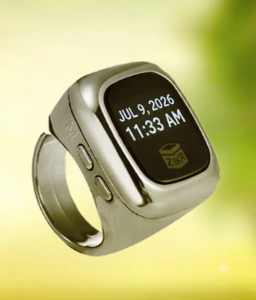
- During prayer or dhikr — a counter lets the mind stay on the words, not the number. See Why Do Muslims Use Tally Counters?
- While handling items — packing, sorting, or checking stock keeps both attention and hands busy.
- In research and observation — watching behavior closely while keeping an accurate record.
For a full list of uses by field, read What Is a Tally Counter Used For? For the advantages in more detail, see What Are the Benefits of Using a Tally Counter?
FAQs
Is a tally counter more accurate than counting in your head?
For long or interrupted counts, usually yes. The counter records every press, so the number doesn’t depend on your memory. Mistakes can still happen if you miss a press or press twice.
Why not just use tally marks?
Tally marks work well when you can sit down and count at your own pace. A counter is easier when you’re standing, moving, or need to keep your eyes on what you’re counting.
Do I need to buy a tally counter?
No. You can use a free online tally counter on your phone. A handheld counter is better if you want to count without looking at a screen. See How to Get a Tally Counter for the options.
Conclusion
People use tally counters for a simple reason: counting in your head is fragile, and tally marks slow you down. A counter keeps the number safe and visible while your attention stays where it belongs. For short, casual counts your head is fine — but when the count is long, busy, or important, a counter is the more reliable choice.